Top Navbar

  • Home
  • About Us
  • Guest Posts
  • Liner Notes

Searchbar

Showing posts with label UC Davis. Show all posts

Friday, November 30, 2018

Friday, November 30, 2018
Comments from the 150th Anniversary Symposium of the University of California Academic Senate, Oakland, California, October 27, 2018, 
by Dylan Rodríguez, Chair of the UC Riverside Academic Senate, Professor, Department of Media and Cultural Studies
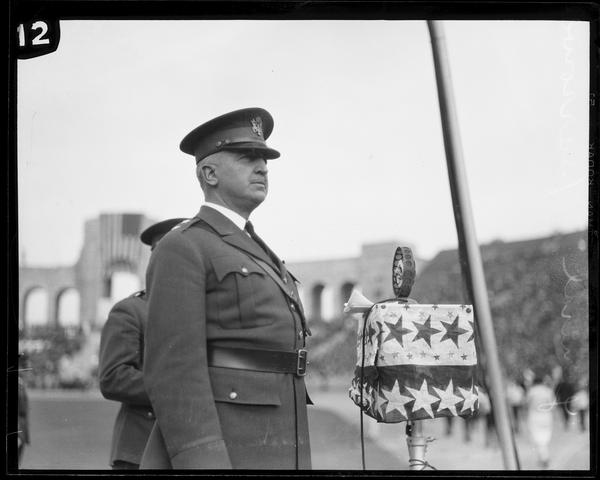
[Photo: Gen. David Barrows, Armistice Day, 1926, courtesy of FoundSF.]

Let us reconsider the full historical context of the University of California’s founding moment and the context in which it coined its motto, “Fiat Lux.”  A brief reflection on the UC’s political, geographic, and historical conditions of possibility may offer some vital complexity and depth to recent college- and university-based discourses on free speech and academic freedom, while raising deeper questions about the notions of “speech” and “freedom” in-and-of-themselves.

The founding of the University of California represents a particular confrontation between Western Euroamerican modernity and the high point of Manifest Destiny—a nation-building cultural, political, and military regime that is inseparable from the UC’s academic and juridical infrastructure.  During this extended period, the UC’s founding faculty and administrators were engaged in a variety of global colonial projects, which is to say racial colonial projects, including the US conquest and protracted colonial governance of the Philippines.

As a Ph.D. student at UC Berkeley, i spent a lot of time in a building named after David Barrows, President of the University of California from 1919-1923.  Barrows had an interest in California Indians, particularly the Cahuilla Tribe, the topic of his Ph.D. dissertation at the University of Chicago (where else?).  Before he became the UC president, Barrows played a pivotal role in the US colonization of the Philippines, during which the US military was engaged in a genocidal military campaign to liquidate and neutralize indigenous resistance to colonial occupation throughout the archipelago.  As people and ecologies were destroyed, burned, and displaced, Barrows accepted an appointment as Chief of the “Bureau of Non-Christian Tribes of the Philippine Islands.”  I imagine that if he were awakened from his mortal slumber, President Barrows might concede that the conditions of his own “academic freedom,” of his freedom to speak and his “freedom of speech,” were not only entangled in but constituted by his lifelong engagements with projects of colonial dominance, from the Cahuilla to the “non-Christian” Philippine tribes.  “Fiat Lux” indeed.

Across these and other historical political geographies of racial-colonial dominance, modern law, rights, and disciplinary academic knowledges affirm white life’s ascendancy over all other life.  This has been the historical, if generally tacit mission statement of the modern university, including the University of California.  War against other life, culture, ecology, and sociality is the genesis of law, rights, and university epistemologies in this instance, structuring the “civility” and the “freedom” that disciplines those who are on the historical margins of that civil society, the underside of the thing called Civilization.

In this sense, it is horrifically appropriate that so many of us engaged in the counter-knowledge productions of critical ethnic studies, queer studies, gender and feminist studies, and decolonial studies have encountered David Barrows’ bronze bust in that building at UC Berkeley.  His visage reminds us that the intellectual space and infrastructure to engage in such counter-knowledge production is the outcome of intense, rigorous, collective social movement that critically extends the entitlements of academic freedom while confronting the ways in which the institutional stability constructed around the edifices of academic freedom is actively policed.

Allow me to turn to the fact of policing in the second half of my reflections on this 150th anniversary.

A spectacle of police violence at UC Davis on November 18, 2011 catalyzed a national and international response, fixated on the vulnerable bodies of young white people engaged in an act of civil disobedience. (With all due respect to the people of color who were also in the line of fire at Davis, my contention is that their bodies were not the ones with which the national and international response was primarily concerned, nor was their vulnerability centrally responsible for inciting this global outrage in the first place.)  Largely displaced by the righteous outcry over the UC Davis police’s pepper spraying of students in November 2011 was a more massive and militarized display of police force/violence that occurred at my home campus of UC Riverside two months later, on January 19, 2012.

On this day, UCR students were shot with “less than lethal” police pellets during protests of tuition/fee increases at a meeting of the UC Regents.  (Here i will gently suggest that we modify our language to acknowledge that these actions might be more comprehensively described as “debt protests.”)  In anticipation of this student-led demonstration, police were mobilized from every UC campus other than Davis and Merced, supplemented by officers from the City of Riverside Police Department and the Riverside County Sheriff’s Department.  Police helicopters periodically circled over the protest, while officers appeared to assume sniper positions at strategic high points on several campus buildings.  The climate was thick with police presence, and the pageantry of political intimidation represented a massive show of force against the students, faculty, staff, and ordinary people who populated the crowd.
Riot police confronting student protest at UC Regents meeting, UC Riverside, January 19, 2012 (photo courtesy of the author)

This police presence starkly contrasted with the protest’s well-disciplined adherence to tactics of “nonviolence.” (By way of definition, i do not consider loud chants, intense and vitriolic rhetorics of protest, militant refusal to disperse an alleged “unlawful assembly” or sit-down blockades to constitute “violence”; further, even if one wishes to perform the academic gymnastics of labeling such activities as forms of discursive, symbolic, existential, and/or immanent violence, they are not of a kind remotely comparable to the aforementioned marshaling of legitimated state violence.) For reasons i have explained elsewhere, we should not be surprised that UC Riverside’s scene of police repression—images of which were easily accessible via e-mail listservs, public YouTube videos, Facebook photos, and the like—did not attract remotely the kind of attention and righteous reaction as did the incident at UC Davis.

There is something structurally white supremacist about how expressions of outrage and institutional shaming over the UC Davis police spectacle seemed to be fueled by an overidentification with (historically white) university campuses as places of presumed innocence, wherein enrolled and employed (white) bodies are presumed to presume innocence.  On the other hand, UC Riverside students generally signify (and biographically reflect) the normalized policing and criminalization of Black, Native, and Brown people—young and old, urban and rural, transgender, queer, and straight.  Such bodies—such people—are incapable of extracting the consensus of liberal outrage surrounding (and ultimately protecting) the repressive university policing of white, able-bodied college youth.  Thus, while all campus policing is fundamentally “political,” only a select few of its most acute forms are addressed as such.

There is a punchline to this story that takes place in a former UCR Chancellor’s living room…

During this period, Chancellor Tim White periodically invited groups of department chairs to his residence for friendly dinners, during which he engaged us in conversation about things we felt were important to the campus.  During the dinner i attended, a fellow departmental chair and i raised concerns over the heavy handedness of the police response to the nonviolent, student-led action of January 19.  (Other chairs seemed either unaware of this matter or uninterested in raising such criticisms of police violence and administrative complicity.)  After eating, the fellow chair and i sat with Chancellor White on his living room couch.  He looked us both in the eye and, in a most calm and reassuring tone, expressed sympathy with our concerns and informed us that he had taken pains to instruct the police to shoot the student protestors “below the knees.”  My colleague and i took turns staring at each other and the floor.  Not long thereafter, i watched Chancellor White shed crocodile tears over the financial hardships of a Black woman undergraduate on an episode of the reality show “Undercover Boss.”

I offer these reflections to deprovincialize and radically contextualize the concepts and jurisprudence of free speech and academic freedom beyond the institutional mythologies of “Fiat Lux.”  Allow me to conclude with a set of overlapping questions that may offer some productive reframing of our ongoing discussions:

  • Who are the assumptive subjects of “free speech” and “academic freedom?” 
  • How are these notions of liberty (particularly as they are inseparable from the jurisprudential regime that produces them as such) structured in relations of gender, race, sexual, and colonial dominance in the long historical and recurrent-present tense?
  • How are free speech and academic freedom actually inhabited by people whose speech and thought are constituted in relations of dominance, such that the underlying humanist allegation at the core of both terms is (perhaps radically) demystified and disrupted?
  • What forms of policing are martialed through the politics of free speech and academic freedom? 

While both "free speech" and "academic freedom" suggest discourses of liberty, i would argue that they cannot be separated from the densely historical, gendered racial-colonial logics that persistently claim to secure such “freedom” and “liberty” against lurking threats from what W.E.B. DuBois famously called “the darker peoples of the world.”
Posted by Chris Newfield | Comments: 1

Tuesday, August 9, 2016

Tuesday, August 9, 2016
As you have probably heard, Linda Katehi submitted her resignation from the position of Chancellor of UC Davis today.  I don't have the time to offer an analysis of the central documents but I wanted to provide links for those of you who would like to look further into the investigative report and the various responses to it.


Chancellor Katehi's Letter of Resignation

Statement of Davis Academic Senate Chair Knoesen regarding the resignation.

Report of Investigation of Chancellor Katehi (with redactions).

Text of President Napolitano's Statement on Chancellor Katehi's Resignation.

Statement by Chancellor Katehi's Attorney Melinda Guzman in response to Report and Resignation.

On President Napolitano's confidential letter to the regents on Chancellor Katehi (Cloudminder)


Posted by Michael Meranze | Comments: 4

Sunday, May 1, 2016

Sunday, May 1, 2016
The simplest political question posed by the ongoing Katehi crisis is, "Can state government trust the University of California to clean its own house?"  The non-firing of Linda Katehi says, "No."  It's hard to imagine a better targeted confirmation of UC's reputation in Sacramento for poor management. If we didn't have the Katehi Affair, Jerry Brown would have had to invent it.

Yes she deserves due process, yes women chancellors deserve it as much as male chancellors do, and yes the campus view should be decisive rather than UCOP's.  But UC's bureaucracy should have prevented the chancellor's "mistakes" before they happened, or an internal investigation should have caught them before the Sacramento Bee did, or President Napolitano should have completed her investigation before she tried to fire Chancellor Katehi, or she should have succeeded in firing her on the basis of the preponderance of the evidence she already had.  None of these things happened.

Dense corporate controls entangle every regular UC employee on a daily basis. It takes dozens of person-hours in a half-dozen offices to set up a post-doc contract.  A researcher can wait 6 months--at least I once did--to get final approval on an outside vendor contract when there is a wrinkle, like a specialized foreign researcher who doesn't carry liability insurance.  The Katehi affair tells the public that senior managers live by different rules. It says the same thing to UC employees.  

This fragmenting of the university polity goes deep.  It's an effective short-term managerial technique, since it divides and demobilizes.  It does enormous long-term damage.  We can't measure that with existing metrics.

One type of damage appeared in CHE coverage of faculty views, where the faculty seemed not just divided but individually ambivalent and unclear.  The title of the piece could have been, "What's Going On?" The interviewees were not working from an explicit standard of management behavior that they felt they should enforce.  Contrast these views with the UC Davis students whom Amy Goodman interviewed and aired on Friday.  Seniors Parisa Esfahani and Kyla Burke (pictured above) produced precise, detailed explanations of the conduct they were protesting. They tied that to their big picture policy issue, "the normalization of the privatization of the university," which they said was subordinating education to money making.  They offered an integrated analysis of the range of Katehi "mistakes" as symptoms of a worldview that they did not accept.  The sense of belonging to the university, and the right / obligation to establish principles to which its leadership would be held to account, has come from the undergraduates.

I thought Linda Katehi should have resigned after the pepper-spray incident in 2011. I thought this not because it "happened on her watch," but because she was unable or unwilling to fix it afterwards. The officer in question, John Pike, earned global fame for the casual contempt with which he doused seated protesters with pepperspray, marking them as outside of the universitas, outside of society. Chancellor Katehi didn't rush to the students' defense, and/or condemn the act (even with the using "pending a full investigation"), and/or discipline wrongdoers in a direct and forthright way. Her eventual reaction became her trademark: slow, calculated, and unsatisfying.  This helped spread the damage through the system, as UCOP hired celebrity chief Bill Bratton's then-firm Kroll Security, with its own conflicts, to investigate UC overall.  She seemed not to take hold of the real issue--obvious police misconduct leading to the violation of the civil rights of the protesters, and of their human dignity. "These are our students, or our neighbors. And this is a university," she did not say.   She did not convene the university as a community with the permanent, historic obligation to understand itself.  My gut feeling was that she presided over "UC Davis" without connection to it.  I was struck by her walk through the silent crowd of students, at night, surrounded by bodyguards, unable or unwilling to speak, as though enfolded in a martyrdom of her own making.

I won't rehearse her current errors--they have received much attention, including Angus Johnston's definitive anatomy of the inane Internet scrubbling contract.  But I will note that her board service was not like that of the other chancellors.  She accepted positions at institutions that are directly opposed to UC interests. King Abdulaziz University games rankings with cash payments to prominent researchers for quasi-no-show jobs in exchange for sharing their citation credit, in order to leapfrog universities that have built reputations over decades. Wiley thrives by overcharging universities and their students for their own research results. DeVry prospers more when UC's public funding is less.  Such board payments are not invitations to internal critique--these institutions get abundant external critiques for free--but to use public servant stature to legitimate for-profits. Chancellor Katehi has shown serial poor judgment, and to me all the incidents flow from the same failure to understand how people think and feel when involved in public service.  She's not a bad person. She just doesn't get it. 

My diffuse but fundamental concern is the general aura or ethos that Linda Katehi has helped sustain. It's not so much the petty self-dealing, culminating in putting her reputation ahead of that of the entire university's, as it is the short selling of what a university is.  The university should stand for justice, enlightenment, and the continuous reconciliation of our private interests with the general welfare.  It should constantly trace great teaching and research back to open communication.  It should benefit student finances rather than hurting them. It should be a public good in the existential sense, where, for starters, regular citizens feel like the university is on their side.  It should model democracy, starting with managers possessed of generosity toward the role of student protesters in having prompted the investigations, and of enough epistemological humility to learn from critics.

This is the university I want. I'm convinced the wider public wants it too.  We have already learned what happens when we don't deliver it.

Posted by Chris Newfield | Comments: 6

Wednesday, April 27, 2016

Wednesday, April 27, 2016
by Linda F. Bisson, Former Chair, Davis Division of the Academic Senate, 2006-2008; 2011-2012
Rachael E. Goodhue, Chair Elect, Davis Division of the Academic Senate 2016-2018


Dear President Napolitano:

We want to express grave concern over a pattern of negativism in the press and social media regarding women Chancellors and senior administrative leaders. 


There are strong parallels between the singularly intensive criticism of our Chancellor Linda Katehi and that previously of Chancellors Fox (UCSD) and Denton (UCSC), and of UC Vice President Greenwood. Yet, the activities that are being criticized clearly fall within the standards of UCwide practice.  This pattern is exemplified by a 2006 LA Times article that criticized compensation practices for senior UC executives: those singled out for criticism for “extravagant pay practices, perks and privilege for top executives” are all women. 

The intensity of the criticism at the time ended in tragedy for Chancellor Denton. Chancellor Fox’s term was equally framed as fraught with turmoil, turmoil apparently not experienced by her male colleagues who were facing identical issues due to budget cuts and lack of diversity and inclusion. In an article in the San Diego Union Tribune written on Chancellor Fox’s decision to step down, she is described in terms steeped in implicit gender bias, including the quote ascribed to former President Richard C. Atkinson:  “She handled that as well as she could have handled it” – not as well as anyone could have handled it or as well as it could have been handled.

Women in leadership positions are often the victims of intense implicit bias and, as a consequence, of the phenomenon of “single storyism” - the reduction of their actions to a simple narrative that appeals to the biases of a broad section of society, in this case implicit gender bias and women being incompetent for their position. Whatever they say or do in response is twisted to fit the “single story.”  We think the LA Times article listed above illustrates perfectly the problem of the single story experienced by senior women administrators at UC.  If the LA Times story were rewritten today, Chancellor Katehi’s name is likely the only one that would be added to the list.


All of UC is richer because of the participation of women and underrepresented groups at all levels. We know you and your leadership team share this belief. We are concerned that UCOP does not recognize that senior administrators who are identified with an underrepresented identity vital to our diversity are subject to vilification in the press simply because of that identity.  We are also concerned, as recent press regarding our Chancellor Katehi demonstrates, that Chancellors and other senior administrators are not well-equipped to deal with single storyism, nor is there the recognition that others, such as UCOP, must step in to address the criticism as well.


The absence of factual information on UC policies and practices with respect to external compensation for all senior administrators has led to speculative and negative public debate regarding a single senior woman, when the practice of external involvement is widespread. We would like to request clear articulation from UCOP of both the formal policies and the informal practices as they pertain to executive compensation (e.g., have senior managers been encouraged to participate in activities outside UC). We note that legislators are calling for the same review. UCOP's understanding of the broader issues involved is essential to informing these external discussions. The need for UCOP to take action is urgent.
 

We thank you for considering this request.
 
c:  André Knoesen, Chair, Davis Division of the Academic Senate
     Dan Hare, Chair, Academic Senate
     Linda Katehi, Chancellor, UCD
Posted by Chris Newfield | Comments: 11

Monday, March 7, 2016

Monday, March 7, 2016
The scandal engulfing UC Davis Chancellor Katehi is only the latest sign of the disconnection between our managerial elite and the rest of the University. While students face increased tuition and debt, faculty and staff face a reduction in benefits, and the entire Berkeley campus faces the possibility of a reduction in academic range and quality, some managers operate in a bubble of their own, hobnobbing in Davos and being paid to sit on corporate boards.

The story surrounding Chancellor Katehi is fairly simple. It turns out that she accepted a position on the Board of the Devry Educational Group, a for-profit college under investigation by two federal agencies. Before that she had also served on the Board of John Wiley and Sons, a publisher of textbooks and academic journals from whom she received $420,000 in stocks and cash. Each of these positions posed potential conflicts of interest: advising companies doing business with UC, her primary employer; supporting a for-profit (and arguably sub-prime) competitor to UC; and assuming responsibility for a textbook company (and implicitly its profits) at a time when the University as a whole has been seeking to ensure lower textbook costs for students. To make matters worse, it appears that Chancellor Katehi accepted the position at Devry without getting the required approval from UCOP. She has now resigned from the DeVry Board.

The case of Chancellor Katehi is remarkable, of course, because her choices have raised obvious questions about conflict of interest. It is hard to imagine that neither she nor her staff could see that joining these Boards (especially DeVry) was unacceptable. If nothing else, one would think that they would recognize that even the appearance of these conflicts would damage the ability of UC to justify increased state funding. It certainly does not generate confidence in her effectively navigating the challenges facing higher education in general and UC in particular. Indeed the situation boggles the mind.

But it would be a mistake to focus too much on her singular case. She is not alone among Chancellors in serving on Boards (and receiving supplemental pay). Nor is she alone in assuming that it is productive for Chancellors to serve on corporate boards. It is this last assumption that lies at the heart of the problem. One aspect of so-called "new normal" (which is neither new nor normal) has been the growing separation of campus and universities managers from the vast majority of employees and the everyday life of their institutions. Determining the extent of "administrative bloat" is admittedly complicated (most of the additional positions are not high-level) but the growth of administrative structures have shifted funds from the core practices of the university--teaching and research. Moreover, the persistence of administrative growth speaks to the lack of transparency that campus administrations provide about the actual functions and effects of this growth. Whatever the justification, the end result is a senior administration cut off from campus and operating in an endless round of fundraising while caught in the echo-chamber of assumptions about the need for closer ties to business and their management models, which are in turn fueled by state funding cuts that rest in part on the belief in their inevitability.

One sign of this separation is Chancellor Katehi's retriggering of the perennial question of executive comp, but it is not the only one. Chris and I have pointed repeatedly to UCOP's consistent willingness to avoid the established mechanisms of shared governance in the University. (here, here, and here for recent discussions). The effect of withdrawing from public discussion is, paradoxically, a more deeply politicized process in which all the key decisions appear to be made by hand-picked participants in a closed system that wastes most of the collective intelligence of the institution. The campuses are not free of similar issues. Let me mention two:

1) The clearest example of the problem is the ongoing crisis at UC Berkeley. In the period after Chancellor Dirks' held his meeting with faculty and staff (which provided little if any clarity by all accounts) the public discussion of change has proceeded through rumor and fear. First were the rumors of the closing of the College of Chemistry with resulting protests, Then there was the closing and reopening of the major in public health, amid rumors surrounding the possibility of major cuts to the School of Public Health. Although it may be inevitable that there will be rumor and agitation at a time of crisis, what we might call "negotiation by anxiety and innuendo" is a sign of the lack of open and transparent discussion. Even the Chancellor's meeting with faculty and staff seemingly offered little to assure people of genuine, open, campus discussion of budget options based upon shared evidence and data made available to the campus as a whole.

2) A similar faux discussion recently took place at UC Riverside. There the issue concerned the constitution and extent of a new proposal for cluster hires. There is much to be said in favor of cluster hires (although they are no panacea and in some cases can simply be a way of forcing more labor onto faculty members). But for them to work they need to be initiated from the bottom and grow out of teaching and research initiatives. At Riverside the opposite was the case. The proposal was initiated from the top by a new administration and, to listen to the results of a survey of faculty experience, the process was unclear, inconsistent, and in the end open to serious distortion at the top. From Inside Higher Ed:

"The process was chaotic, disorganized and very opaque,” reads one narrative survey response, echoing dozens of others expressing similar criticisms. “Enormous amounts of the faculty’s time was wasted. … We’ve been given new instructions repeatedly, have had to redo job descriptions and must search for all the positions simultaneously, which will be very difficult. I doubt the outcome will be good.”

The new Provost Paul D'Anieri, on the other hand, speaking in the language of ownership often typical of senior management, insisted that UC Riverside is "very excited" about the clusters. In this context I suppose that the faculty who spoke out are not part of Riverside.

Each of these cases--Chancellor Katehi's concealed service to UC competitors, UCOP's unilateralism, Berkeley's concealed re-engineering, and Riverside's top down hiring--is a symptom of the general disconnect of senior administrators from the everyday life of the university community. Remarkably, their faith in the wisdom of that world survives the self-inflicted wounds that recur again and again through the disconnection between central administration and faculty and staff. In this the University mimics the world at large, where technocratic elites, anxiously mixing with the masters of capital and business, ignore the needs of the population while their societies and polities spiral ever downward.


Posted by Michael Meranze | Comments: 2

Wednesday, March 5, 2014

Wednesday, March 5, 2014

Students and faculty at UC Davis have created an interactive site (One University, One Debt) for representing and sharing information about the growing debt burden that students face as a result of rising tuition and other costs of attending colleges and universities.  Although focused at Davis, the organizers and curators are eager to have responses from elsewhere and include resources for students and ways to join in or share information and stories.

The home site is Here.  You can go from there to get a wide range of information.  And to respond click to the tab marked "Participation and Response." The curators would like to encourage anyone who wants to share their story and/or is invested in resolving the student debt crisis to us their hashtags: #onedebt and #oneucdavis.
Posted by Michael Meranze | Comments: 1

Monday, December 9, 2013

Monday, December 9, 2013
We're continuing to get mail from all the campuses about the impacts of UC's cancellation of Blue Cross-Anthem and its replacement by UC Care. Most drill down into the kind of detail offered by our Berkeley contributor in October. (If you have already forgotten the blessings of your departing plan, that post chronicled many of them.)  After open enrollment closed at the end of November, a colleague wrote from Irvine:

A group of us just realized that the 20% for use of Tier 2 would affect many people who have dependents living out of state--grown-children students taking a gap year, students in boarding schools, students just graduated.  An accident and hospital stay for these families would be devastating, as they can no longer enroll in the Anthem Blue Cross guest HMO.  And perhaps even worse, retirees on the UC pension living out of state would be in the same situation. I can tell you that my colleagues have no idea of any of this.

Shortly thereafter, one of those out-of-state retirees forwarded an email she'd sent to her campus benefits representative:

I am shocked to learn today that my prescription expenses will increase 500-600% switching from Anthem PPO to UC Care.  While their benefits look pretty much the same on the material sent to us, it is not quite the case when you dig in. It comes down to this in my case: Anthem calculates a $45.00 copay for drugs that are not on their "preferred drug list" while UC Care, via Blue Cross, calculates a 20% co-insurance for a drug that is not on their list, with a $3000.00 maximum.  I have to have shots that are not on either insurer's lists and that cost $1800.00 to $1900.00 a month.  Under Anthem I was paying $45 x 12 = $530 a year. Under UC Care I would have to pay $1850 x  20% x 12=$4440, meaning each year I will pay the $3000.00 maximum.

I found this out just today from one of the "Concierge" at Blue Shield and I find it simply outrageous.  It is outrageous that we are told that coverage will remain pretty much the same, outrageous that UC Care manages to hide so well the real costs to us, outrageous that Oakland did not notice or chose not to notice the real costs to its faculty and retirees. My question to you: is there something you can do about this? and if not, what do you suggest that I can do? 

The answer appears to be no. This is a sizable pay cut, particularly for a retired person.

The UCSB Faculty Association wrote a letter pointing out that UCSB employees are still without local Tier 1 hospitalization under UC Care. It included this summary:

All is, of course, not lost.  If you are insured as an individual, your Tier 2 co-insurance contributions are capped at $3,000.00 per year.  After that, UC Care pays for everything.  Were you also to sign up for an HRA spending account, you could accumulate $2,500.00 in tax-free dollars each year to help with co-insurance costs, and save a little money that way.  Still, many of us would find being out-of-pocket for @$2,200.00 an unwelcome challenge in these diminished times.  Note, too, that the Tier 2 cap for families is much higher than the cap for individuals.  And should we need, while in hospital, to consult a doctor who is not a designated UC Care provider, we would still be responsible for 50% of those costs.  

UCOP officials insisted that UC Care was not about shifting health costs from employer to employees, and the initial publicity spotlighted the drop in monthly payments in moving from Anthem to UC Care.  But sizable cost shifting is indeed occurring, with the burden shouldered first by the chronically (if non-catastrophically) ill, and those with serious but manageable permanent conditions.

What is happening with the project of Tier 1 hospitalization that I noted a couple of weeks ago was still incomplete? The short answer is nothing for this year.

There is now better information than there was last month.  One can find lists of participating hospitals, like this one for UC Riverside. The list seems OK when one reads it from somewhere else, but as the $4400 prescription writer pointed out, the picture changes when one gets past the material to the nuts and bolts.  Riverside's Tier 1 UC Medical Center is in Irvine, not Los Angeles.  In addition, a staff member at UC Riverside reported,

Riverside Community Hospital, the best hospital in the area and a partner with UCR's new medical school, is not included in Tier 1 (UC Select).  If enrolled in UC Care, the faculty in the Medical School will not be able to use the hospital where they're training their students, unless they're willing to pay Tier 2 copayments.  The nearest UC Select hospital, Parkview Community Hospital, does not have a trauma center.

The only hospital in Davis is not in Tier 1, Santa Cruz staff will be driving to Palo Alto for Tier 1 clinical care, and so on. Various complaints we've received suggest that staff at the non-metropolitan campuses will pay more to use UC Care locally. 

In Santa Barbara, the inclusion of Sansum Clinic in Tier 1 was the result of an executive buy-out for 2014.  The deal is off for the years following, pending more successful negotiations.  Cottage Hospital is accessible through Health Net and through Tier 2, but it appears to have had no interest in negotiating Tier 1 with UC.  I was told that UCOP was looking for a per-patient employer payment keyed to their stated costs at the nearest UC Med Center, and the Sansum wanted 50% more.  UCOP apparently was willing to do a one-year top-up for UCSB employees with Sansum, but not with Sansum and Cottage.

I suggested a version of this employer buyout of employee deductibles on the principle of insurance cost pooling, in which individual and group differences come out in the wash. I conclude from my conversations that UCOP rejects this principle and continues to see the UC system as a set of separate cost pools for the purposes of health insurance.  As UC Care continues into out-years, Individual campuses will be expected in effect to self-insure and cover their own costs--except that UCOP controls the overall structure and will not support campuses in cutting their own deals with local providers. In a sense, this is worst of both worlds: UCOP not delivering on the savings of "strategic sourcing," which is supposed to give everybody volume discounts, but individual campuses can't go it alone with local medical groups whom they generally know face-to-face.

UC Care isn't the only insurance system whose opacities take time to penetrate. The New York Times ran a piece today on unexpectedly high costs with Obamacare plans--which are not designed by the government, but by private insurance companies. Here is part of the article:

Insurers devised the new policies on the assumption that consumers would pick a plan based mainly on price, as reflected in the premium. But insurance plans with lower premiums generally have higher deductibles.

In El Paso, Tex., for example, for a husband and wife both age 35, one of the cheapest plans on the federal exchange, offered by Blue Cross and Blue Shield, has a premium less than $300 a month, but the annual deductible is more than $12,000. For a 45-year-old couple seeking insurance on the federal exchange in Saginaw, Mich., a policy with a premium of $515 a month has a deductible of $10,000.

In Santa Cruz, Calif., where the exchange is run by the state, Robert Aaron, a self-employed 56-year-old engineer, said he was looking for a low-cost plan. The best one he could find had a premium of $488 a month. But the annual deductible was $5,000, and that, he said, “sounds really high.”

By contrast, according to the Kaiser Family Foundation, the average deductible in employer-sponsored health plans is $1,135.


UC Care deductibles are lower than these, but the lower-premium higher-deductible is the same.  The scheme is souring potential beneficiaries on Obamacare, and it's not helping relationship within UC either. 

Posted by Chris Newfield | Comments: 8

Wednesday, May 8, 2013

Wednesday, May 8, 2013
The ordeal of UC Davis's "Banker's Dozen" came to a practical end on Monday when they settled with the Yolo County District Attorney on reduced charges stemming from their protest of the connection between US Bank and UC Davis.  As you recall, 11 students and 1 professor had been charged with a range of misdemeanors that could have resulted in up to 11 years imprisonment.  The protesters had been engaged in civil disobedience on the sidewalks around the US Bank to draw attention to the connection between the bank and the University and to oppose increasing privatization of services.  In the settlement, all but one of the charges have been dropped (the last remains but will be dropped contingent on the protesters performing 80 hours of community service). The protesters have agreed to one "infraction." So, in effect a year's unnecessary prosecution will get the Dozen to do what they wanted to do in the first place: serve their community.

A statement from the Banker's Dozen can be found at Reclaim UC.

Cloudminder has a larger collection of links available here.

Corrected 5/9/13 to clarify charge issues.
Posted by Michael Meranze | Comments: 0

Thursday, May 3, 2012

Thursday, May 3, 2012
The Cal State faculty have voted to authorize a two-day strike on all 23 campuses if contract talks fail.  The CSU system has been decimated by the same scale of cuts that have hit UC, and has proposed an unprecedented enrollment freeze on some campuses in the spring of 2013.  Faculty have proposed a 1% raise, which the CSU administration has rejected, and some regulations about class size and a "stable teaching force." The vote for the strike authorization was 95%.

At UC Davis, the Senate's Executive Committee announced that they "hereby censure Chancellor Linda P. B. Katehi for failure to perform adequately the tasks of her office and failure to provide clarity, candor, and trustworthy accounts in relation to the events of November 18, 2011." The Davis Vanguard has coverage.  The Council's Special Committee that wrote the evaluation of the Reynoso and Kroll reports called for Chancellor Katehi's resignation, but the Executive Committee does not.
Posted by Chris Newfield | Comments: 1

Sunday, February 19, 2012

Sunday, February 19, 2012
The Davis Senate concluded its vote Friday on the motion to declare non-confidence in Chancellor Katehi.  The motion failed 697-312.  A second motion—the "five points" motion—that criticized the use of police force against the demonstrators but affirmed confidence in Katehi's responses to the police violence and her "impeccable performance of all her other duties" passed 586 to 408.  UCOP declared itself "gratified" by the results.

Clearly the Davis faculty is deeply split: about the campus leadership, about how to respond to the police violence, and about the general direction in which Davis is moving.  Slightly more faculty cast votes on the clear no-confidence motion than on the "five points" motion; Katehi's support on the latter dropped over 100 votes.  It is clear that the majority of the Senate Faculty are unwilling to break with the Chancellor.  Beyond this, how Davis will respond in the future to Katehi or to the reports about police violence on campus is unclear.

This ambiguity is especially evident if you read the "five points" motion.  Here is the language: 
Posted by Michael Meranze | Comments: 2

Thursday, January 12, 2012

Thursday, January 12, 2012

By Kelley Rees

When I returned to campus after the holidays the calls for resignation and protest seemed largely quieted by the month-long respite. I wasn’t there when police pepper-sprayed my fellow University of California, Davis students. I was wholly unaware. About an hour later I received a text message saying some students were pepper-sprayed. I don’t consider myself an activist, a reformist, a futurist. My initial thought was that the police were in the right, and the students in the wrong. Upon further inquiry I found photos and videos which set my early reactions straight.

morePrior to November 18th, I had seen the small encampment on the Quad but not paid much mind to its intent. I, like many others at the time, wasn’t entirely certain if their purpose was to show camaraderie with the Occupy Wall Street protesters or to begin their own movement focused on University of California tuition hikes. I will say though, that the actions of UC Davis Chancellor Linda Katehi, and the UC Davis Campus Police could not have better unified those whose chief emotion was indifference with those at the very heart of the movement. The large congregation that gathered as riot police closed in on those peacefully seated were not radicals, activists, or extremists of any kind. They were students on their way to classes and faculty on their way to work, interrupted from their daily goings-on – their learning and their employment – not by protestors but by those sent in to disband them.

In the first email Chancellor Katehi sent to those attending UC Davis following the events of November 18th, she affirmed, “We have a responsibility to our entire campus community, including the parents who have entrusted their students to us, to ensure that all can live, learn and work in a safe and secure environment.” However, it was not the protestors, but the actions of the police sent by Chancellor Katehi that disrupted this living, learning, and working. And suddenly the handful of students that had begun protesting an unclear ideology, or a greatly disparate class-structure, or a gross increase in tuition had become thousands of students, faculty, and staff with written objectives and a means of advancing them.

The general assembly held the week following the pepper spraying seemed to me a sort of call to arms. Many, myself included, who had days before walked by the tents without a second glance were now standing side by side fellow believers. Most were not believers in a radical ideology, but in a doctrine that founded our nation – believers in the “right of the people peaceably to assemble.”

I am proud to be part of the University of California but more so because of student actions and not those of the administration. During the general assembly students from other campuses came to speak and show their solidarity. The heads of unions spoke of their support. Dozens of professors and the entire English Department requested the resignation of Chancellor Katehi. Throughout everything students remained peaceful and patient. And it was students who quickly pacified any rare outburst that did occur. When Chancellor Katehi walked to the podium some began to boo. Others quickly silenced them with shushing and calls of “let her speak.” If a more extreme idea was proposed at some point in the assembly, such as the removal of police from the campus, much attention was given to explaining the rational, encouraging questions and debate, and allowing those with dissenting opinions to share their views. It was an ideal example of a democratic process, not the totalitarian tactics seen days earlier.

The mentality that the only fault of the University of California system is the recent police brutality at the Berkeley and the Davis campuses overlooks other significant failings. But from a student’s perspective at least, it seems as though the powers that be, including the Regents and the Chancellor of my own university, refuse to see and acknowledge this. Upton Sinclair once said, "It is difficult to get a man to understand something when his salary depends upon his not understanding it.” (109) Something is out of place when this sentiment so perfectly applies to those leading an institute of higher learning.

Photograph: Paul Sakuma/AP
Posted by Michael Meranze | Comments: 1

Thursday, December 1, 2011

Thursday, December 1, 2011
The many UC crises this November have prompted challenges to longstanding prerogatives of unilateral governance among UC's senior managers. In the aftermath of both cases of police violence last month, members of the UC community identified the real problem as a chronic governance failure and then directly inserted themselves into the governance process.

On the police front, UC officials have long affirmed the generic value of peaceful protest while carefully protecting UC managers from its effects. In the contemporary protest period that began in September 2009, campus officials have allowed most temporary protests while blocking occupations, and have gone to great lengths to insulate officials from direct contact with protesters.
The police arrive for the UCLA section of the Regents meeting on November 28th.

Posted by Chris Newfield | Comments: 2

Friday, November 25, 2011

Friday, November 25, 2011
SOME DAVIS FACULTY GROUPS CALL FOR CHANCELLOR'S RESIGNATION

English Department  (Wa Po coverage)
Physics Department (partial)
Davis Faculty Association Board

The overall petition for Chancellor Katehi's resignation is  nearing 100,000 signatures.
The Davis Enterprise has an Occupy Davis timeline


UC FACULTY STATEMENTS

UC Academic Council (Robert Anderson to Mark Yudof)
UCD's Nathan Brown (Katehi Must Resign) Rally Speech Nov 21
UCD's Cynthia Carter Ching (We Faculty Let Students Down)
UCI Academic Senate Chair Craig Martens 
UCLA English Dept (Solidarity with UC Berkeley English)
UCLA Faculty United (On Removal of Occupy UCLA)
UC Merced Academic Senate Chair Susan Amussen
UCSD Faculty Association (Power of Collective Action)
UCSB Faculty (Letter to Chancellor Yang - Renounce Police Response)
UCSC Academic Senate (Statement; also Chair Susan Gillman on "Rebenching" as an underlying protest issue)
UCSC Graduate Student Association (Demonstration in Support of UC Davis faculty 11/28)

SUPPORTING STATEMENTS FROM OFF-CAMPUS GROUPS

AAUP
California Scholars for Academic Freedom
CUCFA (petition version),
Middle Eastern Studies Association
USC Faculty Statement on UC Police Conduct

Posted by Chris Newfield | Comments: 3

Wednesday, November 23, 2011

Wednesday, November 23, 2011
Crank up the damage control: UC President Mark Yudof appoints William J. Bratton, former chief of NYPD and LAPD to review UC police procedures and to report in a month.

Yudof also appointed a systemwide policy review panel, to be headed by UC General Counsel Charles Robinson and UC Berkeley School of Law Dean Christopher Edley Jr.

UC Davis Chancellor Linda Katehi now says police defied her orders when they used pepper spray. UC Davis police chief blames pepper sprayer Lt. Pike.  Students are not impressed.  See Katehi's speech to students on Monday, and UC Davis's California Professor coverage, e.g. "What Katehi didn't say."

Meanwhile, Lt Pike's fame grows and grows.  He is now the most viewed pepper sprayer in world history.  See the piece linked also linked above for Pike's mixed record as a UC cop.  On the other hand, kudos are offered UC Davis police by a reader in Bakersfield.

UC Davis had a strong turnout for the tuition protests in November of 2009.  I don't think it has every seen crowds like the 5000 on Monday (h/t CA Prof), and may never be the same again. It is now on the global protest map (e.g. Sueddeutsche), has a range of strong and militant voices, and has a growing reputation for protest ingenuity as can be heard in various call-outs to the police in the lead-up to the pepper-spraying.

Update:  The debate continues to grow on the spread of the use of Pepper Spray to subdue protests.  Even the originator of the technique has his doubts.

Update:  Linda Lye points out that "Police crackdowns on Occupy camps are real threat" to democracy, and public health and safety.

Update: State Board forces out President at University of Oregon.  He wanted too much autonomy and also gave faculty raises.  Faculty and Students are dismayed.

Update: Faculty and Students at UCLA's English Department have sent a letter of solidarity to their comrades at Berkeley.

Update: UCSD Students Mic Check Chancellor Marye Anne Fox.
Posted by Chris Newfield | Comments: 0

Monday, November 21, 2011

Monday, November 21, 2011
UCLA Faculty Open Letter on Police Violence.  The Daily Bruin has more.

"The Turning Point": On the example of UC Davis Students.

Cynthia Carter Ching: An Open Letter to Students and Faculty.

Civil Libertarians and experts on Campus Policing appalled by recent UC Behavior.

"An Internet Meme": UC Davis's Lt. Pike plays various  Masters of the Universe.

Is the First Amendment only important in other countries?

UCSB Faculty Letter on UC Davis Police Violence
Posted by Michael Meranze | Comments: 0

Sunday, November 20, 2011

Sunday, November 20, 2011
UPDATE: Yudof to convene Chancellors.
Academic Council Letter to President Yudof

STRUGGLES OVER FREEDOM OF SPEECH AT UC CAMPUSES CONTINUE

After expressions of outrage, Chancellor Katehi begins to walk back her statements on Police Pepper Spray.  The SacBee has more details.

Students impose silent criticism.  More here.

Robert Haas points out that UCPD has given new meaning to the term "beat poets."

Davis Faculty Association calls for Katehi's resignation.

The Council of UC Faculty Associations Calls for an end to the violence against protesters.

Posted by Michael Meranze | Comments: 0

Monday, January 1, 2007

Monday, January 1, 2007
Posted by Alysse | Comments: 0